Tuesday, February 26, 2013

1-800-Contacts, I am not an idiot.

Despite what the caption of my blog may say, I am not a big fan of rants and have made a point to stay away from the temptation of blogging about every little thing that puts a damper on my day. It makes for an uninteresting, whiny post.

But today is an exception. And I'm justifying it more as a "read this, it will save you money" post than a "I am grumbling about 1-800-Contacts" post, to myself at least.

Here's why. 1-800-Contacts is based on the premise of one, pure motto: excellent service and a focus on you, the customer. This means a real live person answers the phone when you call them at their so-easy-to-remember number. This means it takes two clicks to re-order your contacts. This means there's free shipping, and guaranteed no-questions-asked policies on returns, and blahdy blah blah ponies unicorns etc.

This also means they will beat any competitors' price - by 2%, they guarantee! Music to the ears of people like me who want the absolute best deal but who also want that golden customer service, but by no means music I haven't heard elsewhere. In fact, of late, many retailers have taken to this concept of matching or beating the lowest price anywhere, especially with giants like Amazon and Walmart lurking around the corner. The thing is, in most of those cases, the market is already so saturated with competitors and pricing information is so open that the "best price" out there is usually a nominal percentage of the overall price - say, a toaster in Target that's $40.00 instead of on Amazon for $36.00. We're talking a 10% difference here. To me, a four dollar saving isn't worth the time it'd take for me to research and prove the price difference. Chances are I'd already have the toaster in my shopping cart and have moved on to buying a pack of gum.

But in the world of 1-800-Contacts it is a much different story. Because even after you beyond at the flashy rebates they offer (by the way, they are manufacturer's rebates, so they are not special or unique to 1-800-contacts), the price of your contacts is still ridiculously higher than what it can be found for otherwise. Take a look at my one-year supply. I'm paying $70/box before the rebate.


A quick Google Search for "1-Day Acuvue Moist 90 pack" yielded results like this:


I did some quick math. Ignoring the $22.40 one (a 30-day back) and the $69.75 one (not a better deal), all of the other prices were significantly lower than what 1-800 was selling for, even if they tacked on a 10-20% processing fee. So naturally I bring this up with my customer service rep. Now to her credit, she was as pleasant as possible and did all the calculations honestly and quickly. But the fact that she quoted me at $69.99 a box before rebates whereas these sites were selling in the neighborhood of $43.00 a box and then openly acknowledged these competitors' lower prices a.) probably made her feel stupid and b.) made me frustrated that 1-800-Contacts seems to be happily ignoring the obvious fact that any person competent enough to run a Google search could point this out. It's like they are a gas station trying to charge $10 for a gallon when a dozen others are right across the street selling at $4/gallon. Only when the customer points to the blatant price difference do they acknowledge it and say "Oh ok, I guess we can come down then to that price." 

If their business model is truly built upon relying on people to be that stupid or lazy not to do a price comparison, I don't call that focusing on the customer's best interests at all - I call it swindling lazy or ignorant people. Expedited this or that and eager customer service representatives suddenly feel greasy to me - all some bells and whistles that distract from their outrageous pricing. My question is: why place so much focus on the customer experience and expedited service when your pricing is so blatantly inflated? Why not be honest and upfront about what the competitive rates are? Do I look that stupid? My experience ordering from them was swell enough until I got to pricing, and even though I walked away with a total bill in the neighborhood of $400 before rebates instead of $600 for the exact same product and quantity, I still left with a sour taste, a feeling like I'd escaped trickery instead that of contentment and confidence in the company with which I'd just made a hefty transaction.

So. Rant over. Here's my advice when you're ordering from 1-800-Contacts: never do so at their face price. Do thirty minutes of research for what you need and you can find yourself saving hundreds of dollars. Then call them up so you can order through them (be prepared for an awkward moment when you point out how much more expensive their shit is than the one you found) and still take advantage of their great customer service. Maybe when enough customers are taking advantage of their price match program, they will finally admit to themselves that what they're doing doesn't make sense in the age of Google and online price comparisons. Until then, I guess I'll keep having those semi-awkward, elephant-in-the-room conversations and getting the price and service I want.

Wednesday, February 06, 2013

What [the hell] does a BA do?

I get asked this question a lot. Mostly from non-ThoughtWorkers - friends, family, potential ThoughtWorkers I’m interviewing, new clients, and the like. Here’s my attempt to answer the question as inspired by the subreddit “Explain Like I’m 5”.

Sometimes I think the real description for my job title should be "monkey in the middle."
At a high level, a business analyst at ThoughtWorks serves as the liaison between the product owner and the rest of the team (mostly testers and developers) who are building the product. Now that’s vague...really vague. So let’s use an analogy. Imagine that a building is being planned. An architect has the vision and domain expertise for what the building should look like. He or she puts that in a blueprint, which when finished, is passed onto construction workers to actually build the damn thing.

Following me so far? Good, because here’s where my analogy starts to fall apart. You see, software is hard to build in just one blueprint (that’s what we at ThoughtWorks refer to as waterfall development. We’re not big fans of it). Object models and test suites are often more fickle and volatile than good old brick and mortar. As a result of code constantly evolving and changing, there’s lots of STUFF that can get very lost in translation along the way. That’s where BAs like myself come in. We are responsible for minimizing that STUFF. We do so by capturing bite-sized blueprints for one piece of functionality at a time. We call these small blueprints “user stories.” Itty-bitty blueprints are advantageous over one huge ass document because a.) we write them for the very near future, so big changes that happen do not result in a buttload of lost work and b.) we shorten the feedback loop with our customer by developing in small bites. There are c.)’s and d.)’s that I could go on and on about, but that’s for another post.

So, a business analyst’s job is to make these bite-sized stories. In doing so we must work very closely with the product owner, or the visionary, and we’re also in constant communication with the development and testing team. A business analyst thrives in that dichotomy between the panned out, high level, hallelujah! vision of the application and the zoomed-in nitty-gritty of what data needs to be displayed in what div after what click. It’s a role that frequently overlaps with those of Project Managers, Experience Designers, Product Owners, and Testers. Sometimes I feel like my brain is a revolving spice rack in a kitchen of many cooks - during one conversation, my knowledge about X and Y might be brought out to the counter, but as soon as I turn around they will get replaced and instead I’ll need to pull out some M and N instead.

You’re probably thinking, “Ok, all of this is nice. But what do you actually do on a day-to-day basis?” The answer, as many ThoughtWorksian answers end up being, is “It depends.” It depends on the project, on the team, on the client, on the time within the iteration, and on what impending crisis our team is facing (just kidding! Mostly). My first experience as a BA was completely different from what I did on my second project - and not completely out of ineptness, I’d like to add. The role just changes. *shrug*

I can however, answer that question in the context of my current project. I probably spend 75% of my time in the team space. A lot of that consists of talking to the tech lead and product owner about requirements - soliciting them, nitpicking at them, trying to figure out how to frame them smartly and capture them in right-sized portions. A lot of other times I am working with developers and testers - playing with new functionality on their local machines, estimating new stories, or doing kick-offs on existing ones that are about to get picked up. And of course there’s the time spent at my desk actually writing the stories. For this project I am using a tool called Rally to write stories and my favorite med-fi wireframing tool, Balsamiq, for pretty pictures and diagrams.


What I look like when I'm writing a user story.
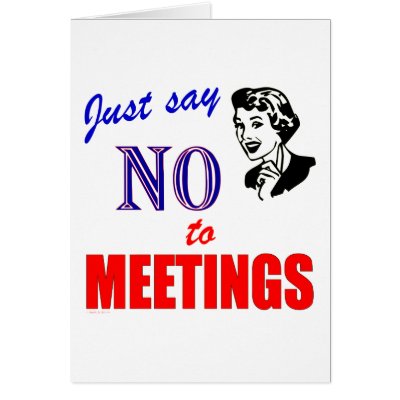
As for the 25% of the time when I’m not in our team space, it’s usually in a meeting of some sort. Most of these meetings are good/productive, like our check-ins with users and community BA meet-ups. For the few where I don’t get a lot out of the meeting or do not contribute much to them, I make an effort to un-invite myself. Based on what previous experience has taught me, the longer you are on a team, especially in a BA or Product Owner capacity, the more meetings you will gradually be invited to or expected to attend as a representative of your team or application. It’s dangerous to fall into this rut of what an colleague once joked as “MDD” - meeting driven development. Therefore it’s important to turn a scrutinizing eye to new meeting invitations. Ask yourself: do I really really really need to be there? Is this the best use of my time? Will the world end if I don’t? If the answer is no to all of the above, skip it. Politely make yourself available for answering questions afterwards and then decline the invitation. It feels like a small miracle every time that happens, but it really shouldn’t.


No truer words to live by than these. Source: Zazzle


I like being a BA - I really do. I have my bad days and my good days, just as all jobs do. But on the whole I find it rewarding and challenging. It lines up well with my skillsets and interests. It’s also a great gateway role into other ones; as a BA you get to get a taste for so many flavors for the type of work that needs to come together to create working software.

It’s hard to believe that my three-year review at ThoughtWorks is coming up and that I’ve been in this BA gig for three years. At this point I definitely feel that I have a strong “BA arsenal” of tools and experiences that I can bring to new project teams, whatever they may need of me. But I also relish the feeling of being a complete noob to the domain and technology whenever I show up on the first day of a project. The challenge is accepted - always!